Cataract Services
What is cataract
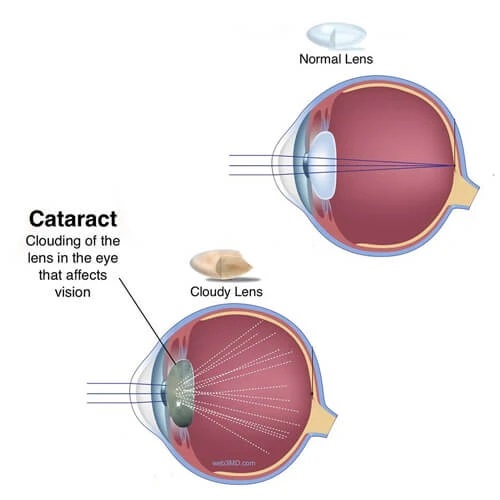
A cataract is a clouding of the lens in the eye, which affects the person’s vision. The lens of the eye is located behind the iris (the colored part of the eye) and the pupil and its main function is to focus light onto the retina, which is responsible for sending visual signals to the brain. In a healthy eye, the lens is clear, but in a person with cataracts, the lens becomes cloudy, causing the light passing through it to scatter and preventing it from reaching the retina properly. This can cause a wide range of vision problems, including blurred vision, glare, and difficulty seeing at night. Cataracts are a common condition, especially in older adults. It is caused by the aging process of the lens, but can also be caused by injury, disease, or certain medications. Cataract can be treated by surgically removing the cloudy lens and replacing it with an artificial one called an intraocular lens (IOL). This is a very common procedure and it is safe and effective in improving vision.
How to you treat Cataract?
The primary treatment for cataract is surgical removal of the clouded lens, followed by replacement with an artificial lens called an intraocular lens (IOL). The surgical procedure is called cataract extraction or phacoemulsification. The surgery is typically performed on an outpatient basis, which means the patient goes home the same day.
The surgery typically takes about 20-30 minutes and is performed under local anesthesia (numbing eye drops). The surgeon makes a small incision in the eye, then uses special instruments to break up and remove the cloudy lens. The new IOL is then inserted into the eye and positioned in the same location as the natural lens.
The procedure is considered to be very safe and effective, with a high success rate in improving vision. Recovery time varies from person to person but usually, the patient can return to normal activities within a few days. Some people experience some discomfort or blurred vision for a few days after the surgery, but these symptoms usually improve quickly.
It’s important to note that there are different types of IOLs available, and your surgeon will recommend the best option for you based on your eye health, age, and visual needs. Some IOLs can correct for nearsightedness, farsightedness, or astigmatism in addition to cataract, which can reduce or eliminate the need for glasses or contacts after surgery.
It’s also important to have regular eye exams after the surgery to monitor the progress of the healing and to check the IOL’s position and function.
In some cases, cataract may not be severe enough to affect vision and may not require surgery. In these cases, the doctor may recommend wearing eyeglasses or contacts, or using brighter lighting to help improve vision.
What are the types of intra ocular lens?
There are several types of intraocular lenses (IOLs) that can be used during cataract surgery to replace the clouded natural lens. The most common types of IOLs include:
- Monofocal IOLs: These are the most basic type of IOLs and are designed to correct for distance vision only. They do not provide correction for near or intermediate vision, so glasses may still be needed for reading or other close-up tasks.
- Multifocal IOLs: These IOLs have multiple focusing points, allowing for improved near, intermediate and far vision, reducing the need for glasses after surgery.
- Accommodating IOLs: These IOLs are designed to move and flex within the eye, changing focus from distance to near vision. They work similar as the natural lens and also reduce the need for glasses after surgery.
- Toric IOLs: These IOLs are designed to correct for astigmatism, which is an irregular shape of the cornea or lens that causes blurred vision at all distances.
- Extended depth of focus IOLs: These IOLs have a single focus point but have a larger depth of focus, allowing for improved intermediate and far vision.
The best type of IOL for you will depend on your individual needs, including your visual acuity, lifestyle, and overall eye health. Your surgeon will work with you to determine the best option for you.
It’s important to note that regardless of the type of IOL you choose, you will still need regular check-ups after surgery to monitor the progress of healing and to check the position and function of the IOL.